Arctic foxes in the National Park

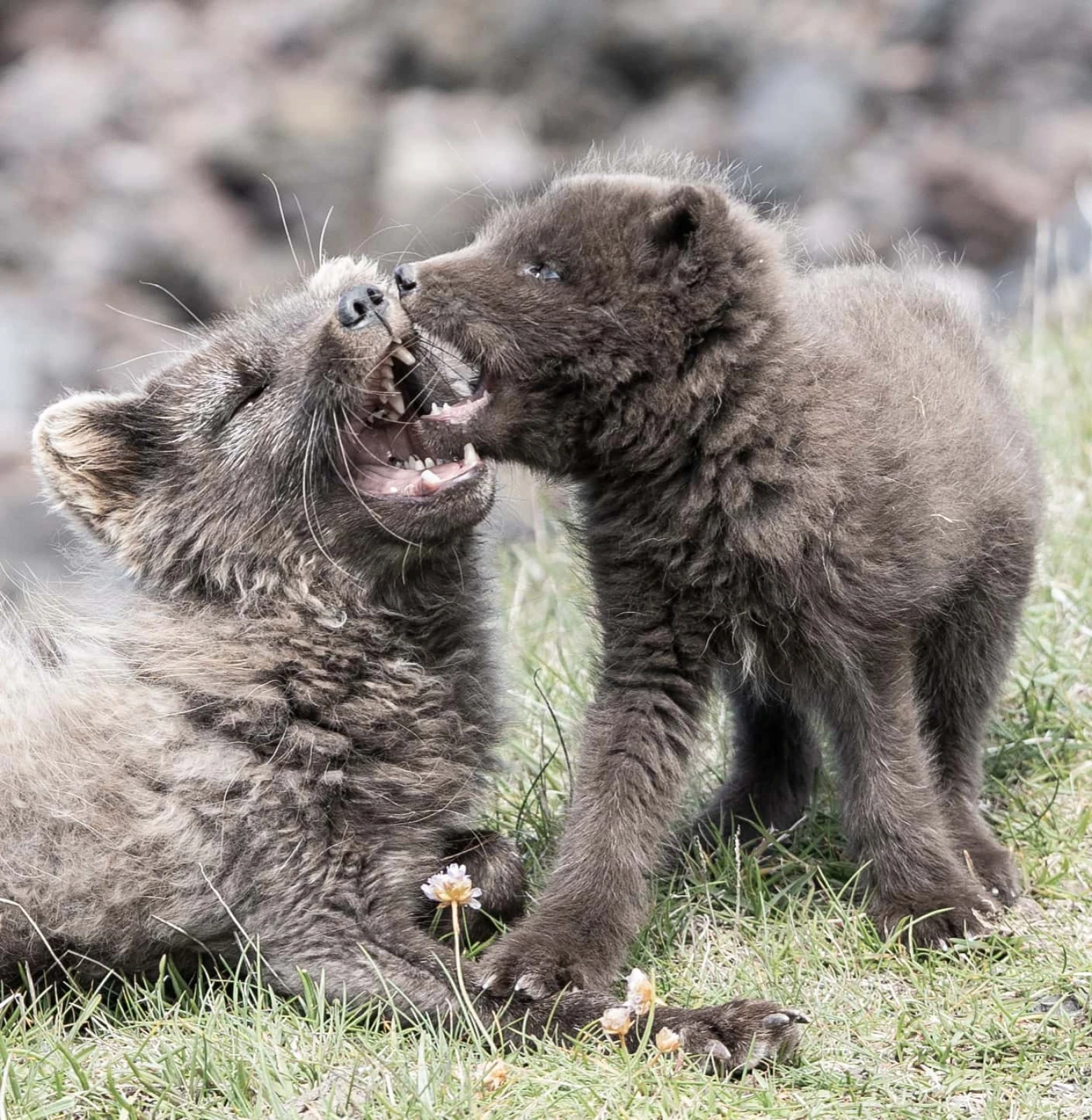
Arctic Fox
A Native Pioneer
The Arctic fox (Vulpes lagopus, formerly Alopex lagopus) is Iceland’s only native terrestrial mammal. It is believed that the species arrived in Iceland at the end of the last Ice Age.

Colour Variations
Arctic foxes are generally either blue morph (brownish-grey) or white morph in colour. Blue foxes retain their dark colouring throughout the year. White foxes are almost entirely white during winter, but in summer they become two-toned, with a greyish-brown back and a light-coloured underside.
The blue colouration provides excellent camouflage along Iceland’s rocky shores, while the white coat offers protection from detection in areas with heavy winter snow cover.

Social Structure and Breeding
The Arctic fox's social system is primarily based on monogamy and a solitary lifestyle.
The behaviour of Icelandic foxes varies with the seasons. Winter is characterized by preparation for the breeding season and pregnancy. Both males and females reach sexual maturity during their first winter. Mating takes place in March, and gestation lasts just under 60 days.
The cubs are completely dependent on their mother's milk for the first 3 to 4 weeks of life. The den serves as the residence of the vixen and her cubs, while the male rarely, if ever, enters it.
A pair occupies a territory, which is the area they use daily to obtain food and other necessities. Several dens may be located within the same territory, and the pair may relocate between dens if they deem it necessary.

Diet
The main food sources of Arctic foxes in Iceland are birds, eggs, chicks, and various invertebrates such as amphipods, seaweed fly larvae, and bee larvae.
On the outer coast of the Snæfellsnes Peninsula are seabird cliffs where large numbers of birds nest, particularly common guillemots, Brünnich's guillemots, northern fulmars, and black-legged kittiwakes. Because these birds only occupy the cliffs for a few weeks each year, foxes must hunt intensively during this period and build food reserves that will last into the winter.
Mortality among young foxes during their first winter is high, and only the strongest individuals survive.

How We Should Interact with Arctic Foxes
Arctic foxes, like other wild animals, are protected under Icelandic nature conservation laws. No exemptions are granted for fox hunting within the National Park.
Fox dens are also protected from disturbance and unnecessary interference from 1 May to 31 July. Studies have shown that foxes living in heavily disturbed areas hunt less frequently and bring food back to their dens less often. As a result, fewer cubs survive the summer, and those that do survive are often less prepared to endure their first winter.
It is therefore important to respect the animals and their natural behaviour when visiting the area.
Guidelines for Visitors
If you see a fox and wish to take photographs, the best approach is to remain still and observe from a distance.
Do not attempt to chase or follow the animals.
If you remain quiet and avoid unnecessary movement, the fox may approach you on its own if it feels safe.
Avoid staying near fox dens during June and July.
When observing foxes at a den, maintain a distance of at least 40 metres (130 feet), preferably more, and do not remain there for long periods.
If foxes show signs of fear or distress, move farther away.
Avoid positioning yourself between parents and their offspring, and always give the animals space to move freely.
Do not feed foxes, as this is ultimately harmful to their long-term wellbeing.
Fox families require extended periods of undisturbed rest and normal social interaction. For this reason, visitors are encouraged to avoid travelling near dens between 7:00 PM and 9:00 AM